
10 Best Constant Contact Alternatives for 2026
Searching for Constant Contact alternatives? We review 10 top ESPs for e-commerce, SaaS, and startups, focusing on price, deliverability, and real use cases.

On this page
Is Your Constant Contact Bill Out of Control?
You started with Constant Contact because it was easy to understand. Templates were built in, setup was straightforward, and you didn’t need to think much about infrastructure. Then your list grew. You wanted better automation, cleaner segmentation, maybe SMS, maybe transactional email, maybe tighter ecommerce flows. That’s when the cracks usually show up.
The fundamental problem isn’t just feature gaps. It’s the pricing model behind most traditional ESPs. You rent the whole stack. The sending infrastructure, the interface, the deliverability setup, the reputation layer, the contact database, all of it. That’s convenient early on, but it gets expensive fast, and you still don’t control the foundation your email program runs on.
That’s why most lists of constant contact alternatives miss the actual decision. You’re not only choosing between dashboards. You’re choosing between renting convenience and owning more of your email operation.
If you want the lowest friction, there are strong hosted tools here. If you want lower long-term costs, more control over deliverability, and less vendor lock-in, there’s a different path.
1. Mailtani
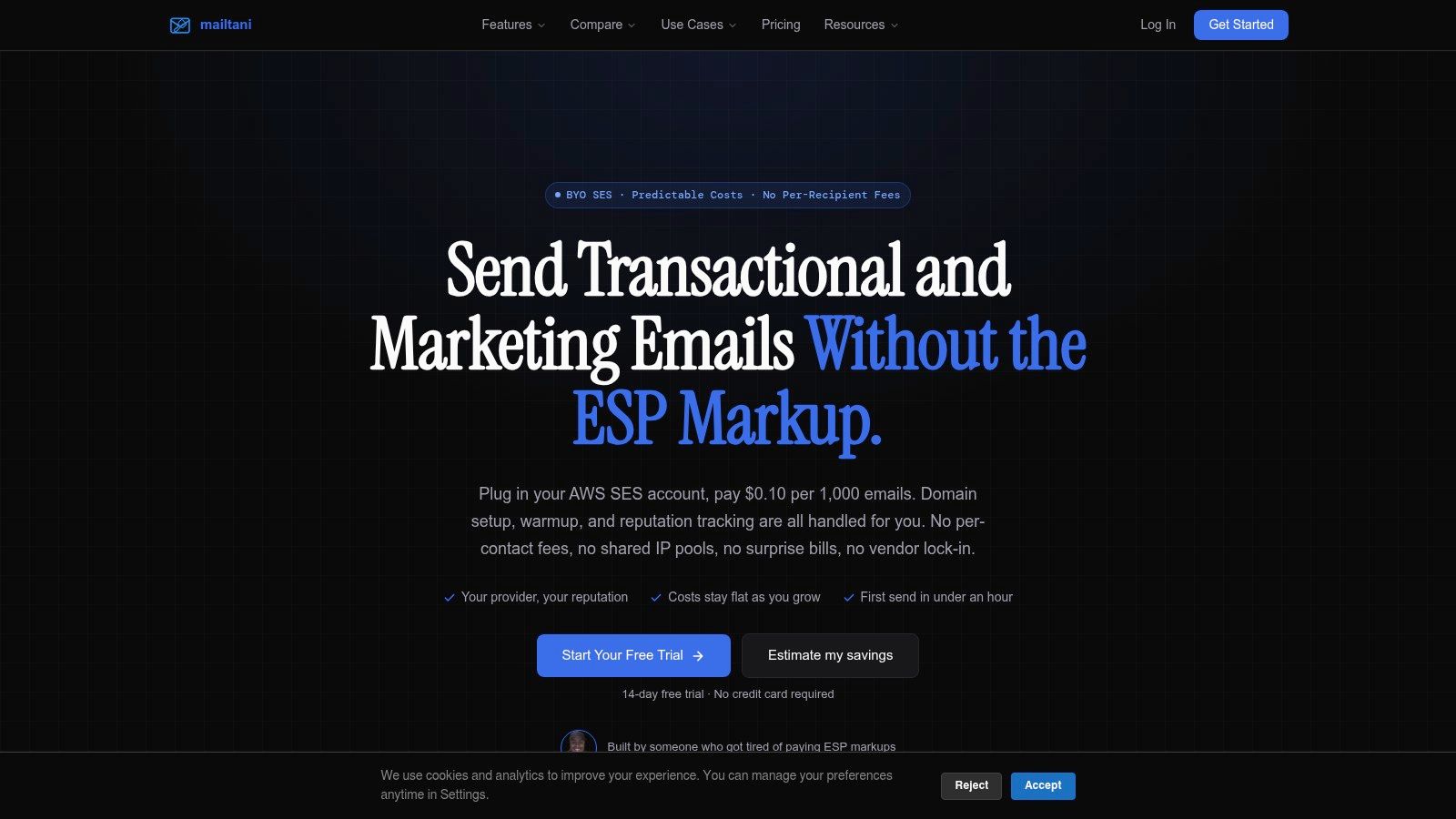
Mailtani is the clearest example of the ownership model. Instead of paying a hosted ESP markup forever, you connect your own sending provider, such as Amazon SES, Resend, or Mailtrap, and run campaigns from a marketing app built on top of that infrastructure. If you’ve ever looked at your ESP bill and wondered how much of it is actual sending versus platform rent, this model answers that directly.
The appeal is cost control. The sending side runs on provider pricing that can be around €0.10 per 1,000 emails, and Mailtani itself is sold as a one-time lifetime license at €99 for the first 100 licenses, then €149 after. That’s a very different equation from per-contact billing that climbs every time your list grows.
Why Mailtani changes the economics
This is what you pick when you’re done renting shared infrastructure and want more control over what affects inbox placement. You manage your own domain authentication, your own provider account, and your own sender reputation. That means more setup responsibility, but also more ownership if deliverability matters to revenue.
A lot of the practical tooling is already bundled. You get broadcasts, cold sequences, visual automations, forms, segmentation, analytics, IMAP sync for replies, and a REST API. You can see the product scope on the Mailtani features page.
Practical rule: If you care about unit economics and sender control more than a polished all-hosted experience, BYO-provider beats traditional ESP pricing surprisingly fast.
Where it works best
Mailtani fits teams that can handle light technical setup. You’ll need to connect a provider, verify domains, configure DNS, and treat deliverability like an operational responsibility instead of something outsourced to a shared pool. Setup is described as taking under an hour, and there’s a 14-day free trial with no card required plus a 14-day money-back guarantee.
What works well:
- Cost predictability: One-time platform pricing plus direct provider fees.
- Deliverability ownership: Your domain, your DKIM and DMARC setup, your reputation.
- Hybrid use cases: Marketing email, cold outreach, transactional mail, and automations in one place.
What doesn’t:
- Less plug-and-play: You have to manage provider accounts and DNS.
- No hiding from setup mistakes: If authentication or warmup is sloppy, results will reflect that.
2. Klaviyo
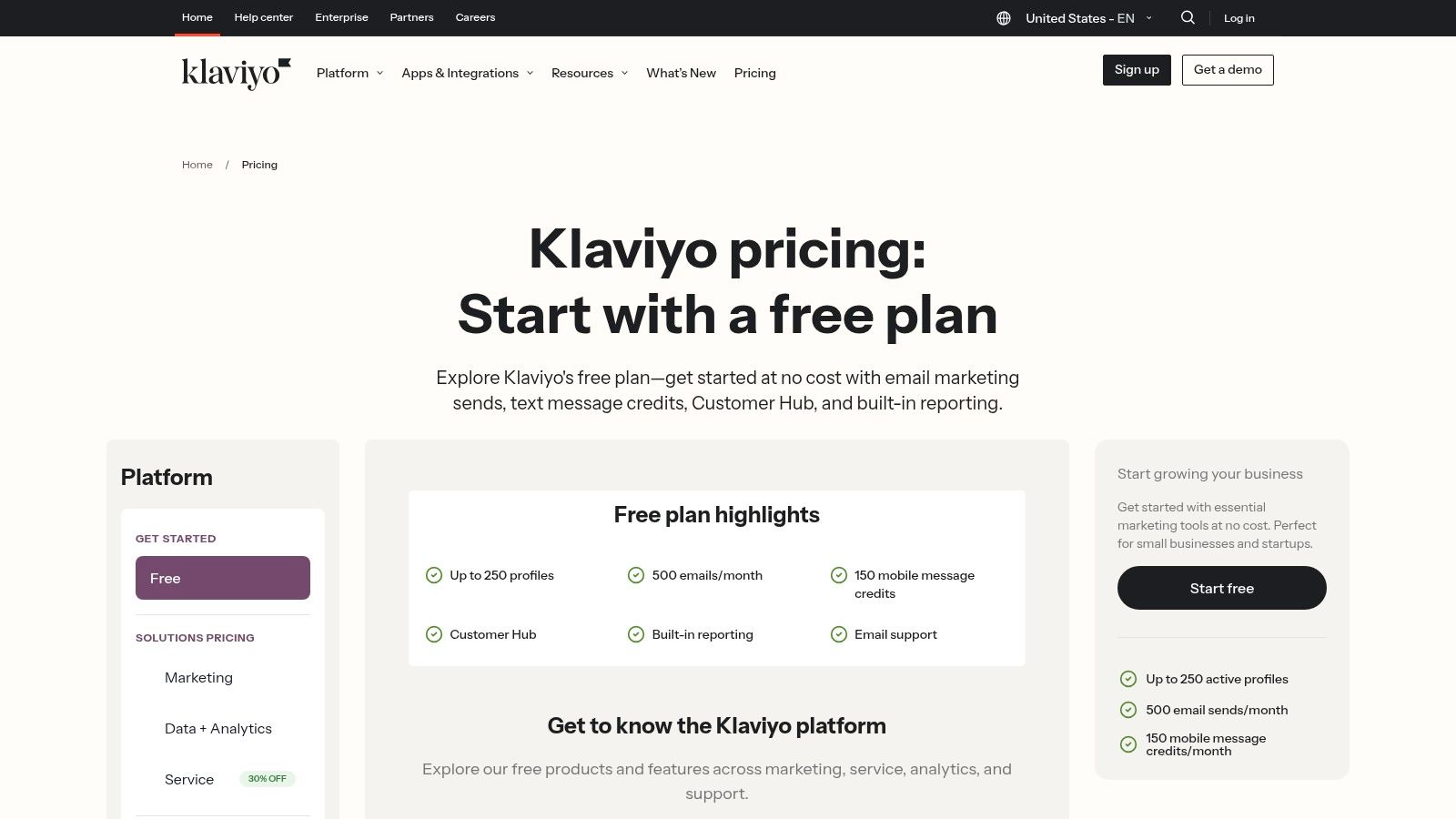
Klaviyo is still one of the best constant contact alternatives if you run a store and want your customer data to power the whole program. It’s built around ecommerce behavior, not general newsletter sending, so it tends to make more sense for Shopify, BigCommerce, and WooCommerce merchants than for service businesses or local brands.
The trade-off is straightforward. You’re still renting a premium platform, but you’re getting a much better data model for lifecycle marketing than Constant Contact gives you. That matters when you need browse abandonment, cart recovery, post-purchase logic, and revenue-aware segmentation.
Best when your store data drives the whole program
Klaviyo is a strong fit when email and SMS are tightly tied to product catalog data and on-site behavior. The visual flows, segmentation, and attribution are built for merchants who want to run retention seriously, not just send campaigns.
One signal that matters here is switching behavior. Constant Contact shows a 23% competitor switch rate, while Klaviyo sits at 15%. That doesn’t automatically make Klaviyo right for every business, but it does show that people tend to leave Constant Contact more often than they leave stronger alternatives.
If your business makes money from lifecycle flows, don’t optimize for the cheapest dashboard. Optimize for the cleanest customer data and the fewest workflow limitations.
Klaviyo’s downside is bloat for simple senders. If you mostly publish newsletters and occasional promos, you may end up paying for an ecommerce operating system you won’t fully use.
Use Klaviyo when:
- Your store platform is central: Shopify and similar stacks benefit most.
- You need revenue attribution: Not just opens and clicks.
- You want mature ecommerce playbooks: Especially for DTC retention.
Visit Klaviyo pricing.
3. Mailchimp
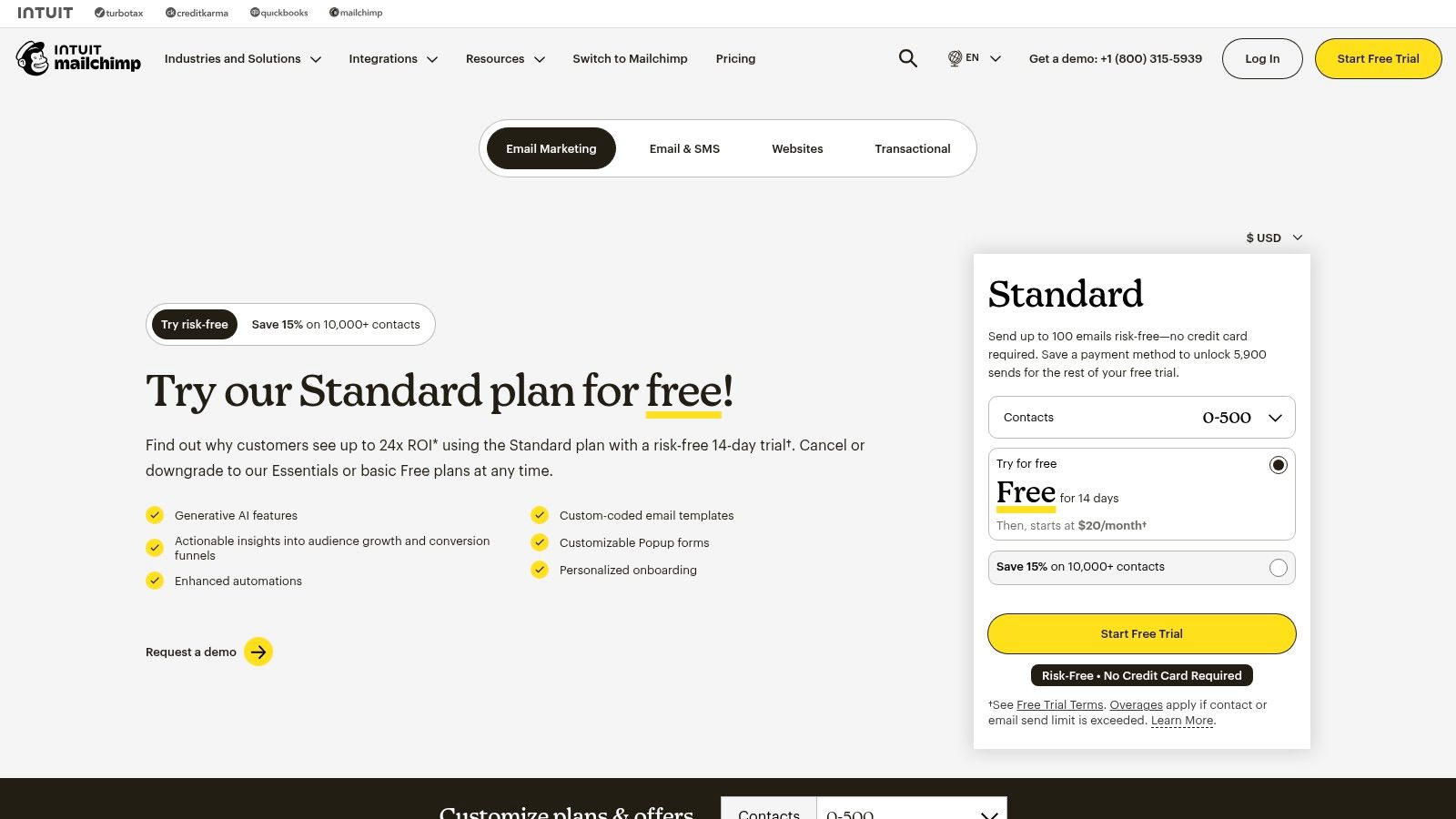
If you want the safest mainstream move away from Constant Contact, Mailchimp is usually the first stop. It has broad market adoption, a huge integration ecosystem, and enough depth to support teams that have outgrown basic newsletters but aren’t ready for a more technical stack.
Mailchimp’s strongest argument is momentum. It has a 68% adoption rate compared with Constant Contact’s 10% adoption rate. That gap tells you where a lot of SMB buyers are landing when they want ease of use plus more room to grow.
The safest mainstream switch for most SMBs
Mailchimp also wins early on with packaging. Its free plan covers up to 500 contacts with unlimited email sends, while Constant Contact offers a 30-day free trial and then starts at $12 per month. For a small team trying to migrate without procurement drama, that difference matters.
There’s also a satisfaction signal. Mailchimp holds a 4.4 out of 5 rating across 5,000+ reviews on major comparison platforms. That’s not the same as saying everyone loves it. Some users still find advanced automation features harder to learn than the entry-level experience suggests.
If you’re deciding between big-name hosted tools, this breakdown on Klaviyo vs Mailchimp is useful because it highlights where ecommerce depth diverges from general-purpose simplicity. If the Constant Contact comparison itself is the main question, the Mailchimp vs Constant Contact breakdown is the more direct reference.
For teams doing a deeper comparison, the Mailchimp alternatives page covers what's worth looking at when Mailchimp itself isn't the right fit either.
Mailchimp is a good choice if you want:
- A familiar UI: Easy to hand off across teams.
- Broad integrations: Useful when your stack changes often.
- A moderate learning curve: More capable than Constant Contact without going fully technical.
The trade-off is long-term cost. Mailchimp is still a rental model, so convenience stays high, but so does dependence on platform pricing as your database grows.
Visit Mailchimp pricing.
4. Omnisend
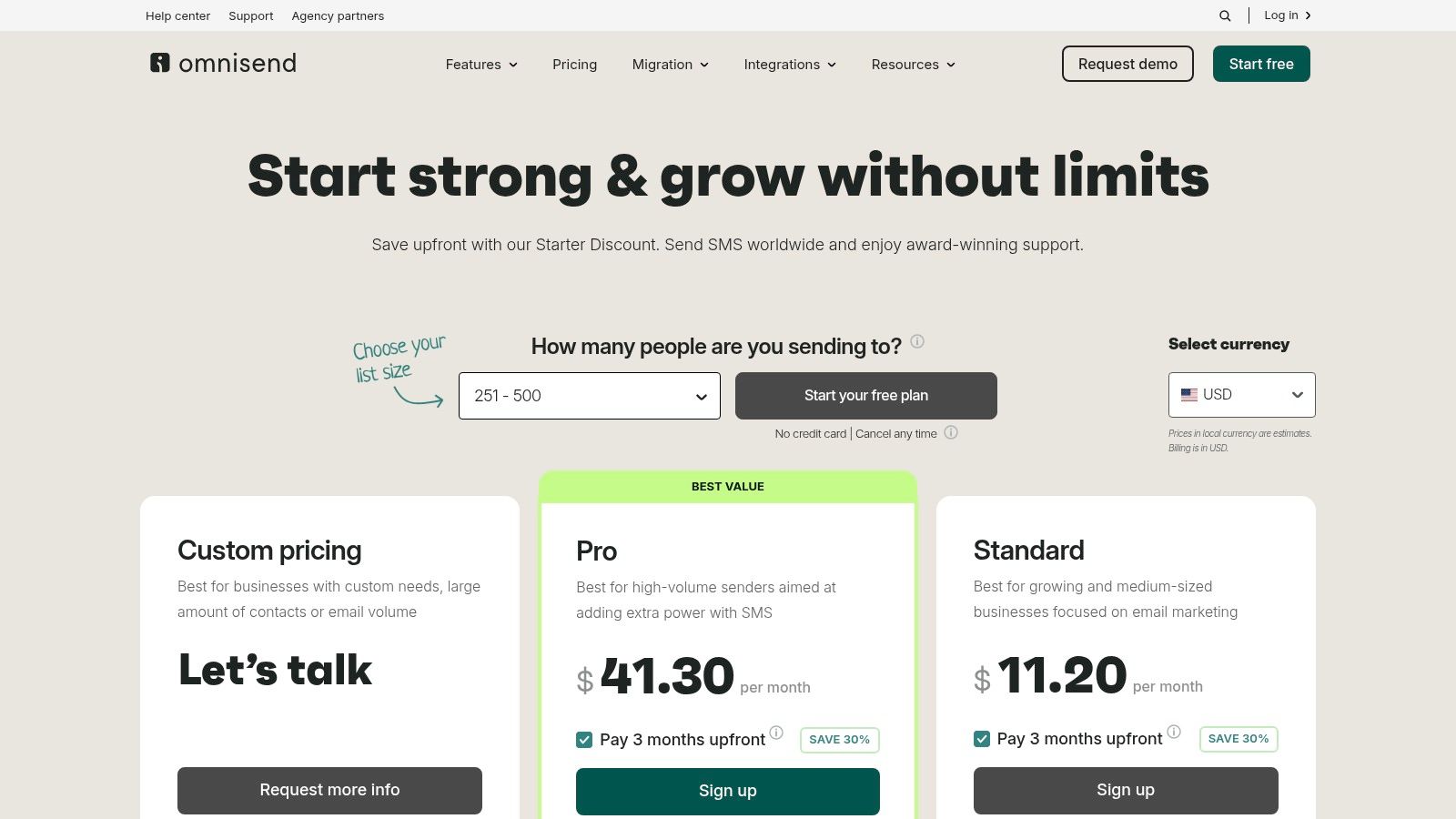
Omnisend is what I’d call a speed-to-execution ecommerce platform. It’s for merchants who want multi-channel campaigns, prebuilt workflows, and less setup friction than a more customizable system. If Klaviyo feels like a data-heavy operating system, Omnisend often feels like a quicker path to getting core automations live.
That makes it one of the more practical constant contact alternatives for stores with lean teams. You can get email, SMS, and push in one builder without building much from scratch.
A practical ecommerce option when you want speed
Omnisend works best when your retention team is small and your goal is coverage, not infinite customization. You want the welcome flow, cart abandonment, post-purchase, and win-back programs in place quickly. You also want support and migration help without involving engineering.
What works:
- Prebuilt workflows: Faster launch for standard ecommerce journeys.
- Multi-channel orchestration: Useful when email alone isn’t enough.
- Merchant-friendly defaults: Less time spent designing automation logic from zero.
What doesn’t:
- Pricing still scales with subscribers: You’re still renting access.
- Less room for unusual setups: Great for standard DTC motion, less ideal for edge cases.
The free-plan branding can also be annoying if presentation matters. That’s not a dealbreaker, but it’s one of those details that reminds you convenience usually comes with platform constraints.
Visit Omnisend pricing.
5. Brevo formerly Sendinblue
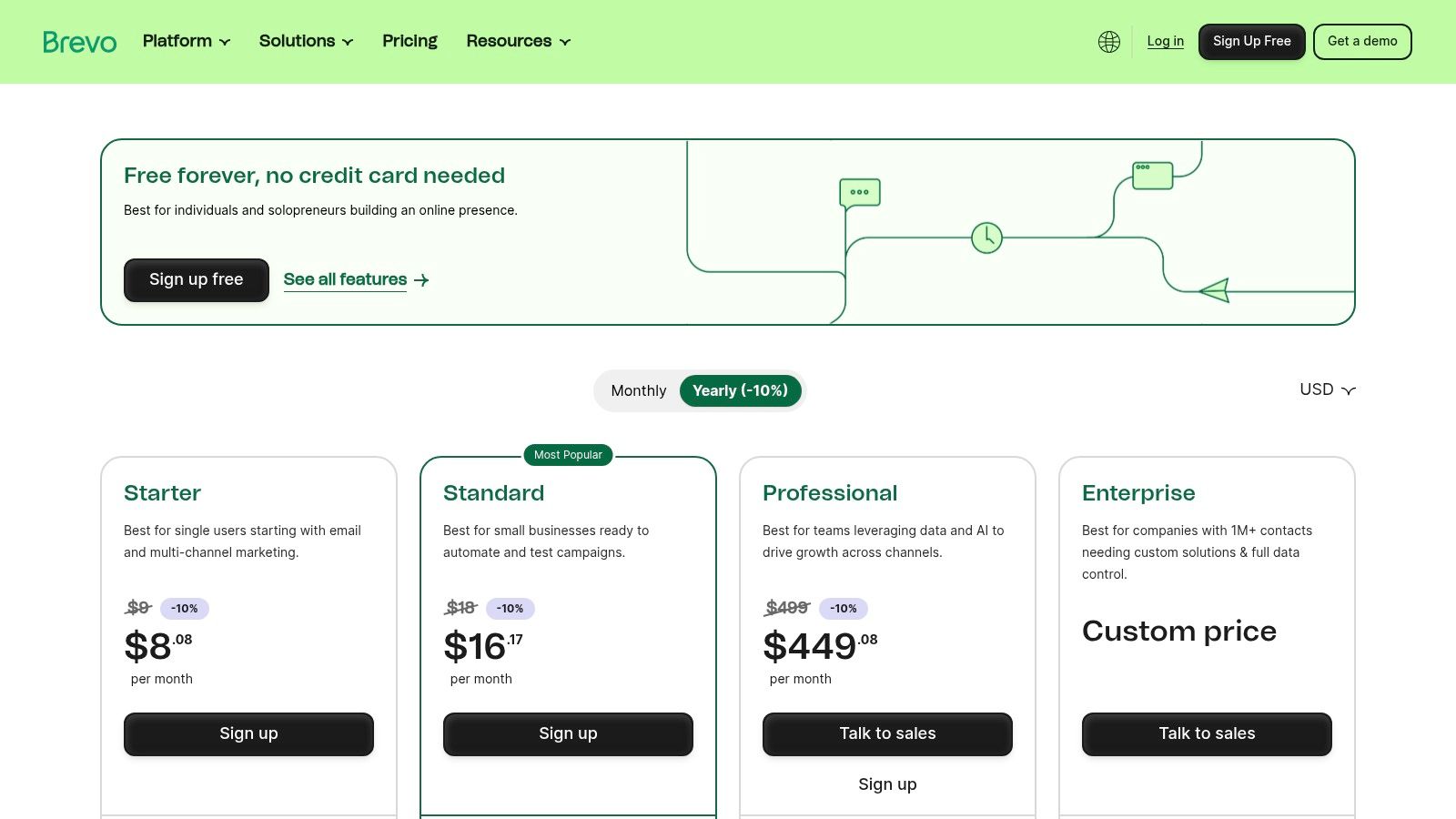
Brevo is one of the strongest hosted alternatives if your contact list is large but you don’t email every segment constantly. Its pricing model is based on email volume instead of contact count, which is often a better fit for companies with big databases and targeted send patterns.
That single pricing difference changes the buying math. You stop paying mainly for stored contacts and start paying more in line with send volume.
Good fit if your list is large but your send volume is controlled
Brevo gets mentioned often because it breaks away from the standard per-contact subscription structure. In the broader alternatives market, it stands out for offering unlimited contact storage plus SMS and email from one dashboard, using a volume-based model rather than list-based billing, according to Retainful’s Constant Contact alternatives analysis.
That’s useful if your database includes many low-frequency or seasonal subscribers. With Constant Contact, those dormant records still push you into higher pricing tiers. With Brevo, the economics can be friendlier if you send selectively.
For brands with a big database and a disciplined send calendar, volume-based pricing usually makes more sense than paying rent on every stored contact.
Brevo isn’t perfect. Lower tiers can limit automation depth, and some advanced capabilities are reserved for more expensive plans. But for many SMBs, it’s a cleaner middle ground than Constant Contact: still hosted, still easy enough, but less punishing when contact counts rise.
Brevo is a smart choice if you want:
- Unlimited contact storage: Without direct list-size penalties.
- Email plus SMS: In one hosted platform.
- A simpler move away from subscriber-based billing: Without going fully self-managed.
Visit Brevo pricing.
6. ActiveCampaign
ActiveCampaign is what you choose when your email program is really a customer journey engine. It’s not the easiest migration if your team is used to simple campaign sends, but it’s a serious step up when you need conditional logic, behavioral triggers, and deeper lifecycle orchestration.
The renting-versus-owning lens presents an interesting dynamic. ActiveCampaign is still a hosted platform, so you don’t gain infrastructure ownership. What you gain is more strategic control inside the software layer.
Choose this for logic-heavy lifecycle marketing
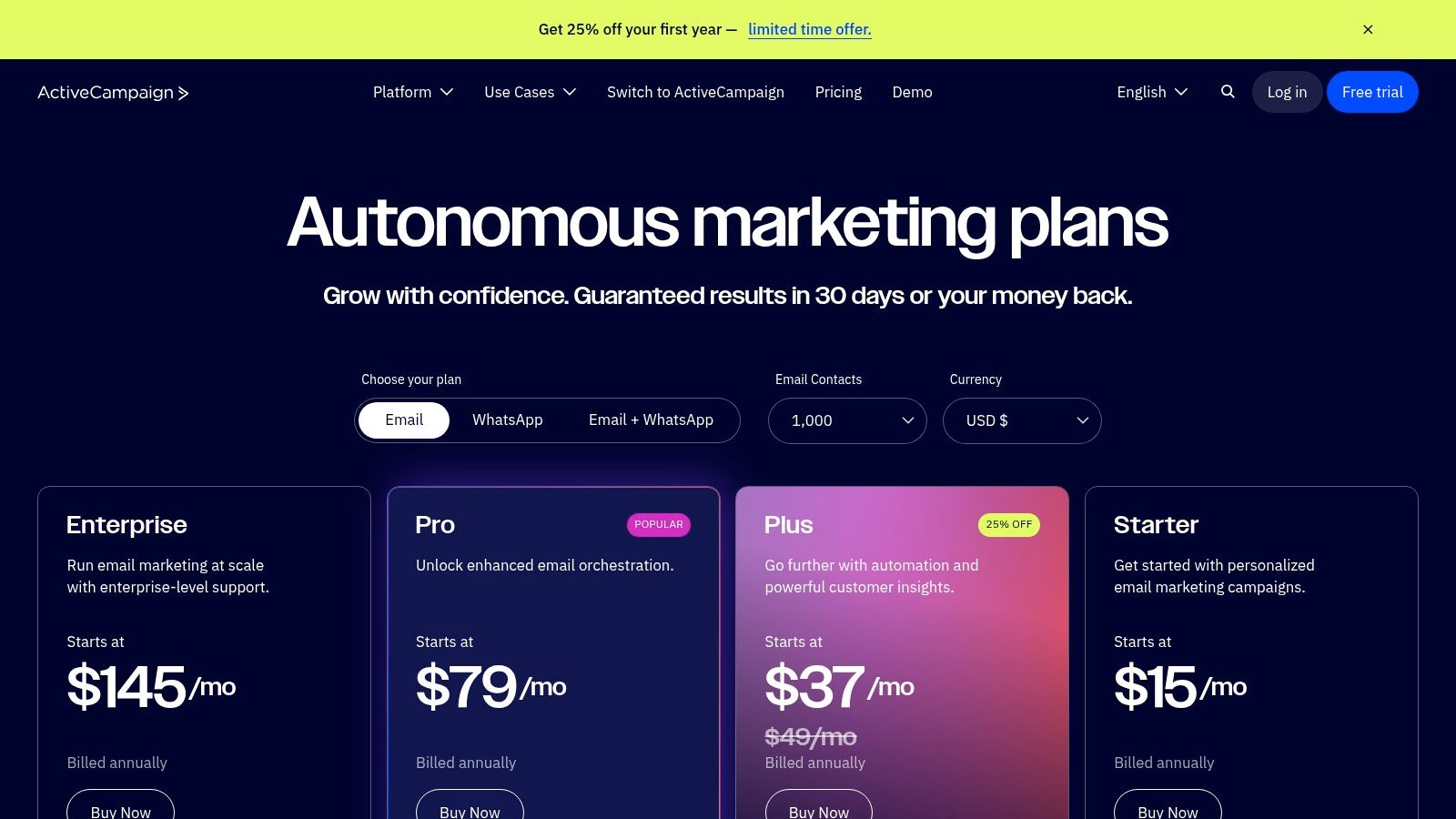
One useful benchmark: ActiveCampaign starts at $15 per month and offers 900+ integrations. That broad integration footprint matters when email data has to coordinate with CRM, ecommerce, support, or product usage systems.
There’s also stronger evidence of user pull versus Constant Contact. Ramp’s comparison notes that 88% of ActiveCampaign users report faster value and 67% ROI in 6 months via advanced segmentation and real-time analytics. I’d treat that as a signal about why buyers move upmarket, not as a promise for your exact results.
If you’re building a newsletter from scratch or tightening your lifecycle basics before switching tools, this guide on how to start a newsletter is a practical place to sanity-check process before you add more software complexity.
What ActiveCampaign does well:
- Complex automation logic: Better than basic autoresponders.
- Segmentation depth: Useful for lifecycle teams.
- Stack flexibility: A strong fit when many systems need to talk to each other.
What to watch:
- Learning curve: Non-marketers can get lost fast.
- Add-ons and tiering: Costs can creep up as needs expand.
7. MailerLite
MailerLite is the tool I’d hand to a lean team that wants to move quickly, keep costs visible, and avoid enterprise-style bloat. It’s one of the cleaner transitions for startups, creators, and smaller ecommerce teams that have outgrown Constant Contact but don’t need a heavyweight automation stack.
The appeal is usability. You get the basics many teams use, without paying for a lot of architecture you may never touch.
Strong value if you want less software, not more
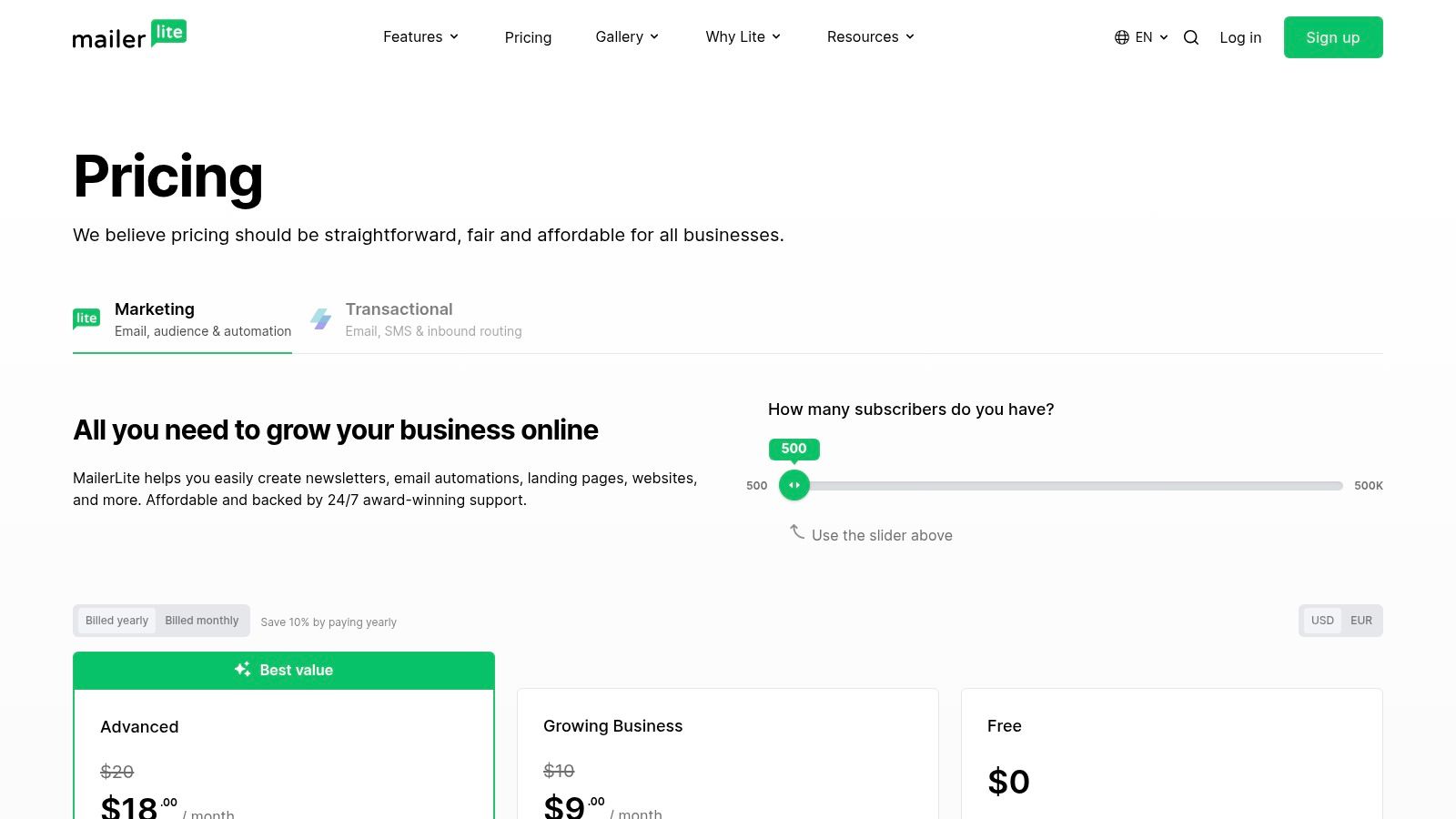
In the alternatives market, MailerLite is often part of the pricing conversation because it bundles landing pages and website tools while staying relatively approachable. Retainful notes that it offers website and landing page builders from $9 per month.
There’s also a bigger hidden-cost angle worth paying attention to. Sequenzy points out that many guides compare only subscription fees and ignore infrastructure markup, citing MailerLite at $73 per month for 10,000 subscribers as part of that blind spot. That doesn’t make MailerLite a bad deal. It just means even “affordable” hosted tools still bundle platform overhead into the monthly bill.
MailerLite is a good fit when:
- You value a clean interface: Easy onboarding for small teams.
- You want decent automation without complexity overload: Enough for many SMBs.
- You like transparent-feeling pricing: Even if it’s still hosted SaaS pricing.
It becomes less compelling if ecommerce revenue attribution or highly specific branching logic is the center of your strategy.
Visit MailerLite pricing.
8. Campaign Monitor
Campaign Monitor is a design-first alternative. If your team cares most about polished emails, strong template control, and a smoother creative workflow, it deserves a look. It’s especially appealing to brand teams and agencies where presentation is part of the product.
That said, design-led platforms can hide an operational trade-off. A beautiful builder doesn’t automatically solve automation depth or infrastructure control.
Best for teams that care about presentation first
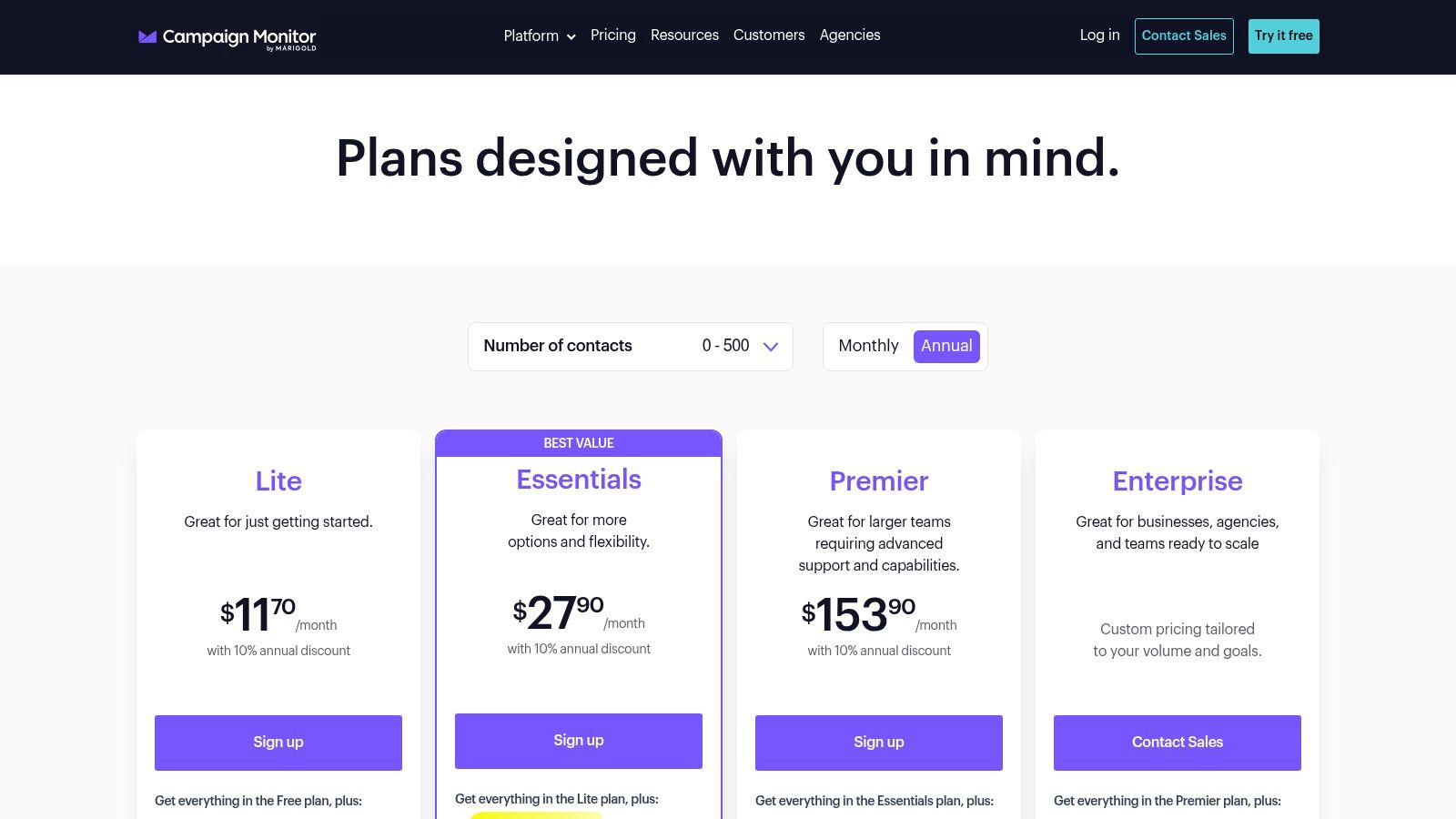
Campaign Monitor fits teams sending branded campaigns on a regular cadence, especially if they don’t need deep ecommerce logic or a lightweight CRM inside the same tool. The pay-as-you-go option is also useful for infrequent senders who don’t want a full monthly commitment.
The bigger caution here is deliverability decision-making. Campaign Monitor is often praised for strong inboxing, but the broader market still lacks quantified guidance on the trade-off between shared and dedicated infrastructure. Sequenzy’s research gap is important: marketers comparing Constant Contact alternatives still don’t get enough hard analysis on how shared pools affect placement, spam rates, or reputation management in practical terms, as discussed in Campaign Monitor’s alternative market context.
Better design tooling improves output quality. It doesn’t replace sender reputation ownership.
Choose Campaign Monitor if:
- Creative quality is the priority: Especially for brand-led sends.
- You want a simpler interface for polished campaigns: Without heavier CRM logic.
- You send occasionally enough to value PAYG flexibility: More than a complex platform contract.
Visit Campaign Monitor pricing.
9. Drip
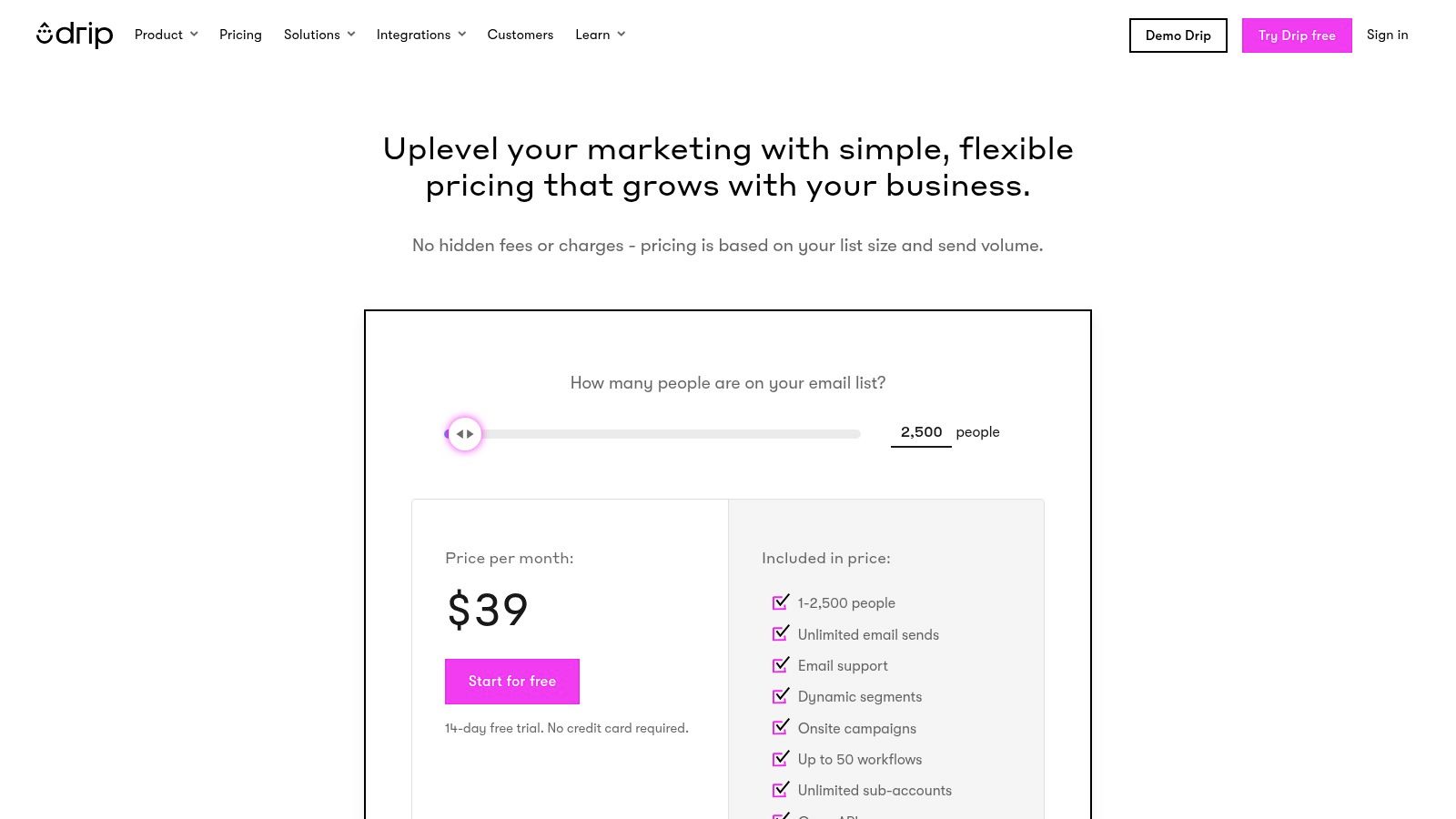
Drip sits in an interesting middle lane. It’s ecommerce-focused like Klaviyo, but often feels narrower and less sprawling. That’s a good thing if you want behavior-based flows and revenue-minded segmentation without adopting a platform that tries to become your whole operating system.
For DTC brands, Drip tends to work best when email is the main retention channel and you want strong workflows without a lot of extra software surface area.
A focused DTC tool that avoids some platform bloat
Drip’s value is focus. It gives you event-based workflows, ecommerce segmentation, and integrations with the carts and tools that matter most to merchants. If your team needs clarity more than endless options, that can be a real advantage.
What stands out:
- Behavior-driven journeys: Browse, cart, purchase, and win-back patterns fit naturally.
- Usable workflow design: Enough sophistication without drowning smaller teams.
- DTC orientation: Better fit for stores than general SMB newsletters.
What to watch:
- Less compelling outside ecommerce: Narrower use case.
- Channel depth can vary: Email is usually the strongest piece of the product.
If you’re comparing Drip against bigger ecommerce suites, the key question is whether you want maximum ecosystem breadth or a more focused workflow tool. Stores with simple product lines often prefer the latter.
Visit Drip pricing.
10. Twilio SendGrid Marketing Campaigns
SendGrid is different from most entries here because it appeals to engineering and marketing at the same time. If your business sends both promotional and transactional email, and you want one provider to support both, SendGrid deserves a serious look.
It’s not the most opinionated marketing platform. That’s exactly why some technical teams like it.
Best when engineering and marketing need one stack
SendGrid works well when developers care about APIs, event handling, and operational reliability, while marketing still needs campaign tools and a designer. It’s a hybrid stack, not a pure marketer-first experience.
That means the UI may feel less guided than tools built entirely for ecommerce or SMB campaigns. But in exchange, you get a more unified setup for transactional and promotional sends on the same provider.
This is usually the right call when:
- Product email and marketing email overlap operationally: One team owns both.
- You need API depth: Not just drag-and-drop campaigns.
- Your company is scaling process, not only list size: Engineering involvement is normal.
This is usually the wrong call when:
- You want ecommerce-specific retention playbooks out of the box: Other tools do that better.
- You want the simplest path for non-technical marketers: SendGrid assumes more comfort with technical concepts.
Visit Twilio SendGrid pricing.
Top 10 Constant Contact Alternatives, Features & Pricing
| Product | Core features | Deliverability & control | Pricing & value | Best for |
|---|---|---|---|---|
| Mailtani (Recommended) | Broadcasts, cold sequences, visual flows, signup forms, segmentation, analytics, REST API, IMAP sync | BYO SES/Resend/Mailtrap, full DKIM/DMARC, inbox warmup & rotation, own sender reputation | One-time license (intro €99), pay provider ~€0.10/1,000 emails, no subscriber tiers | E‑commerce, indie hackers, SaaS founders, growth engineers who want cost/control |
| Klaviyo | Visual flow builder, predictive analytics, native SMS, deep ecommerce integrations | Managed ESP, strong deliverability for Shopify stores | Pricing rises quickly with list size | DTC merchants, Shopify/BigCommerce stores |
| Mailchimp | Drag‑and‑drop editor, templates, automations, basic CRM | Managed ESP, simple deliverability tools | Free tier limited; costs scale by contacts | Small SMBs and non‑technical teams starting out |
| Omnisend | Email + SMS + push, prebuilt ecommerce workflows, templates | Managed infra, good ecommerce integrations | Good value for ecommerce; pricing scales with subscribers | Ecommerce merchants wanting multi‑channel campaigns |
| Brevo (Sendinblue) | Volume‑based plans, automation, landing pages, SMS, transactional | Managed ESP, pricing decoupled from contact counts | Priced by emails sent; generous free tier for low volume | Large contact stores that send infrequently |
| ActiveCampaign | Multi‑step automations, segmentation, conditional content, CRM add‑ons | Managed ESP, advanced automation controls | Tiers and add‑ons can increase total cost | Lifecycle marketers, sales-enabled teams |
| MailerLite | Drag‑and‑drop editor, automations, landing pages, API | Managed ESP, straightforward deliverability | Low starting cost, transparent pricing | Startups and lean teams seeking simplicity |
| Campaign Monitor | Elegant templates, Journeys automation, PAYG option | Reliable deliverability, design‑forward tools | PAYG for occasional senders; tiered plans | Brand/design‑led teams and infrequent senders |
| Drip | Event‑driven workflows, revenue attribution, ecommerce integrations | Managed ESP focused on ecommerce behaviors | Simpler pricing than some ecommerce tools | DTC stores needing behavior‑based automation |
| Twilio SendGrid – Marketing Campaigns | Email API + Marketing Campaigns, automations, testing | Robust infra for high volume, unified transactional + promos | Flexible but can be confusing for Marketing Campaigns | Dev teams needing combined API and marketing tools |
Stop Renting Your Infrastructure, Start Owning It
Most businesses don’t leave Constant Contact because of one missing feature. They leave because the whole arrangement stops making sense. The list gets bigger, the bill gets heavier, automations stay basic, and you still don’t control the infrastructure that decides whether your emails reach the inbox.
That’s why the best constant contact alternatives fall into two very different camps.
The first camp is upgraded renting. Mailchimp, Brevo, ActiveCampaign, Klaviyo, Omnisend, MailerLite, Campaign Monitor, Drip, and SendGrid all improve on Constant Contact in different ways. Some give you better ecommerce depth. Some give you cleaner automation. Some give you more flexible pricing. Some give you stronger design or API coverage. If your main goal is a better hosted platform with less friction, one of those will likely fit.
The second camp is ownership. That’s where Mailtani stands apart. Instead of accepting the standard hosted ESP markup, you separate the software layer from the sending layer. You bring your own provider, pay provider-level sending costs directly, and keep more control over authentication, reputation, rotation, suppression, and portability. That model isn’t for everyone. If your team wants pure convenience and zero technical setup, hosted tools still win.
But if you’ve reached the point where email is material to revenue, it’s worth asking harder questions. Do you want to keep paying software rent on every stored contact? Do you want to share infrastructure with senders you can’t control? Do you want your email program tied tightly to one vendor’s policy decisions, billing structure, and limitations?
For a lot of growing brands, the answer eventually becomes no.
That doesn’t mean every company should jump straight to a BYO-provider model. It means you should choose intentionally. If you’re a local business sending occasional newsletters, a hosted tool may stay the smartest option. If you run a DTC brand, a SaaS product, or a high-volume lifecycle program, ownership starts to look much more attractive because cost control and deliverability control become the same conversation.
The right tool depends on what you’re optimizing for.
If you want broad adoption and easy onboarding, Mailchimp is the safe hosted option. If you want ecommerce depth, Klaviyo or Omnisend make sense. If you want automation muscle, ActiveCampaign is hard to ignore. If you want volume-based pricing without full technical ownership, Brevo is a smart middle ground. If you want to stop paying recurring ESP markup and control the infrastructure underneath your email operation, Mailtani is the most direct answer.
At some point, every growing sender has to decide whether email is just another SaaS subscription or a core business system. Mailtani's one-time pricing model is designed around that decision. Once it becomes the second, renting forever starts looking expensive.
If you’re tired of rising ESP bills and want a platform that gives you more control over cost and deliverability, take a close look at Mailtani. It gives you the marketing layer you need, broadcasts, sequences, automations, forms, analytics, and API access, while letting you use your own sending provider instead of paying recurring markup on rented infrastructure.


