
10 Cheap Mailchimp Alternatives for 2026
Looking for cheap Mailchimp alternatives? Explore our 2026 guide to 10 affordable ESPs with pricing, pros & cons for e-commerce, SaaS, and creators.

On this page
Is Your Mailchimp Bill Out of Control?
You cross a subscriber threshold, check your inbox, and there it is. Another Mailchimp invoice that’s noticeably higher than the last one. That pattern gets old fast, especially when email is supposed to be a reliable growth channel, not a budgeting surprise.
A lot of teams don’t leave Mailchimp because it’s unusable. They leave because the pricing model stops making sense. The list grows, the bill grows with it, and you still end up paying for plenty of functionality you may never touch. For founders, marketers, and operators trying to protect margin, that’s the primary friction.
That’s why the best cheap mailchimp alternatives aren’t all the same kind of product. Some are all-in-one platforms for teams that want simplicity. Some are bring-your-own-provider tools for people who care more about cost control and deliverability ownership. Some are creator platforms built around newsletters first, not ecommerce or CRM workflows.
This guide is organized by business model, not by a random feature checklist. If you’re a hands-off marketer, you’ll quickly see which hosted tools are easiest to live with. If you’re a developer or growth-minded operator, you’ll spot the options that avoid hosted ESP markup altogether. If you run a media newsletter, you’ll find the tools that make monetization easier.
If you also spend time comparing other marketing software stacks, Outrank's take on Semrush rivals is worth a read.
1. Mailtani
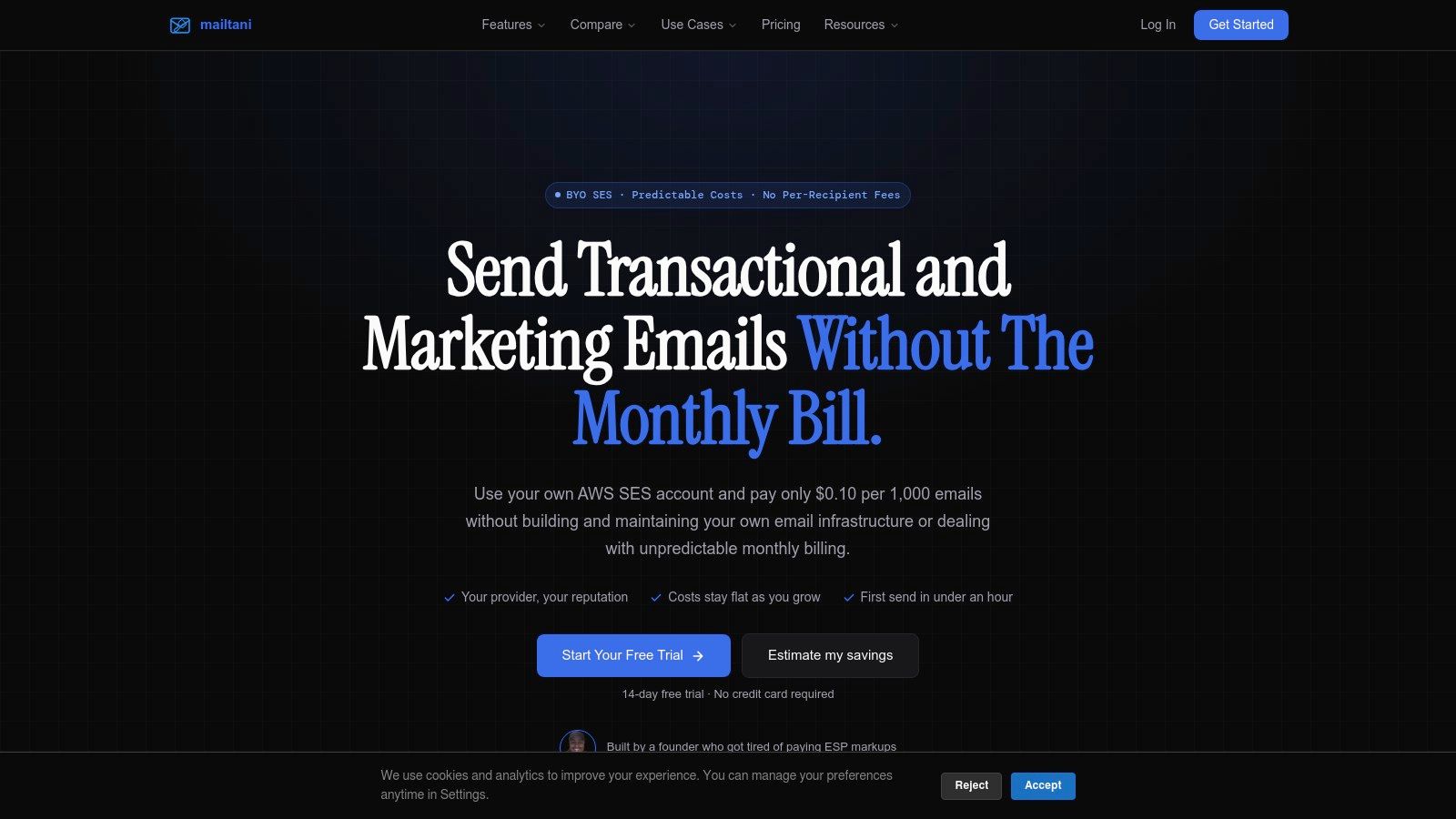
A familiar scenario: your list grows, revenue grows with it, and then your email bill starts rising for a reason that has nothing to do with sends. You are paying more to store contacts inside someone else’s platform. Mailtani is one of the clearest alternatives if that pricing model is the problem.
It sits firmly in the BYOP category of this list. You connect Amazon SES, Resend, or Mailtrap, and Mailtani handles the interface, campaigns, automations, forms, segmentation, analytics, REST API access, and an IMAP-synced unified inbox. That split matters. Instead of buying a bundled hosted ESP, you buy the software layer and pay your sending provider separately.
Why Mailtani is different
The practical benefit is cost control with ownership. You pay once for the app, then pay your provider for the sends. As noted in GMass's comparison of Mailchimp alternatives, there is a real gap in the market between standard hosted ESPs and tools built around bring-your-own sending infrastructure.
For founders and operators watching unit economics, that changes the conversation. The bill tracks your sending provider and your usage, not just the size of your database. You also keep control of domain authentication, provider selection, and account reputation, which is a real advantage once email becomes a core acquisition channel.
Practical rule: If Mailchimp feels expensive because your contact count keeps climbing, it is worth comparing pricing models, not just monthly plans.
Mailtani also addresses a problem many founders discover after their first deliverability scare: shared IP reputation. If another sender on a hosted platform creates issues, careful senders can still feel the effects. With a BYOP setup, the DNS work and reputation management sit with your own provider account. That adds responsibility, but it also cuts down on black-box surprises.
Where it fits and where it does not
Mailtani fits teams that want lower long-term costs and are comfortable handling provider setup. Ecommerce brands, SaaS companies, indie founders, and technical operators usually get the most value here because they can configure domains, manage API keys, and treat warmup and list hygiene seriously.
The trade-off is straightforward. Mailtani gives you more control, but it does not remove the work that comes with that control. You still need to set up DNS records, connect a sending service, monitor reputation, and follow good sending practices. A hands-off marketer who wants a fully managed all-in-one platform will usually be happier in a different category on this list.
A few strengths stand out:
- Cost model: no per-subscriber billing from the app layer. You pay your provider for sends.
- Ownership: you control DKIM, DMARC, provider choice, and sender reputation.
- Portability: if one provider changes pricing or policy, switching is easier than leaving a closed hosted ESP.
- Fit: strong choice for technical teams that want email software to plug into a broader stack.
Among cheap Mailchimp alternatives, Mailtani stands out because it changes the business model, not just the monthly price.
2. Sendy
Sendy has been the classic answer for people who want low-cost email sending and don’t mind getting their hands dirty. It’s self-hosted software, usually paired with Amazon SES, and that makes it much closer to infrastructure ownership than a normal hosted ESP.
This is not the tool I’d hand to a marketing team that never wants to think about servers, updates, or app maintenance. But for a technical founder or a lean operator, Sendy still makes sense because it strips the model down to basics.
Best for operators who do not mind self-hosting
What works well in Sendy is the directness. You get campaigns, autoresponders, segments, custom fields, bounce and complaint handling, multi-brand support, and an API. You also get the very real benefit of not paying contact-based SaaS pricing just to keep a list inside someone else’s dashboard.
Where people trip up is operational overhead. Self-hosting sounds cheap until nobody owns updates, security, backups, or server issues. That’s the hidden cost. If you’re comfortable with that, Sendy can be a strong choice. If you’re not, a managed BYOP tool is usually the better version of the same idea.
Sendy is cheap because it offloads work back to you. If that’s fine, it’s a good trade. If not, it gets expensive in time.
I’d choose Sendy when the priority is minimizing software spend and keeping control over deliverability setup. I wouldn’t choose it if your team needs a unified inbox, polished collaboration experience, or a less technical day-to-day workflow.
3. EmailOctopus
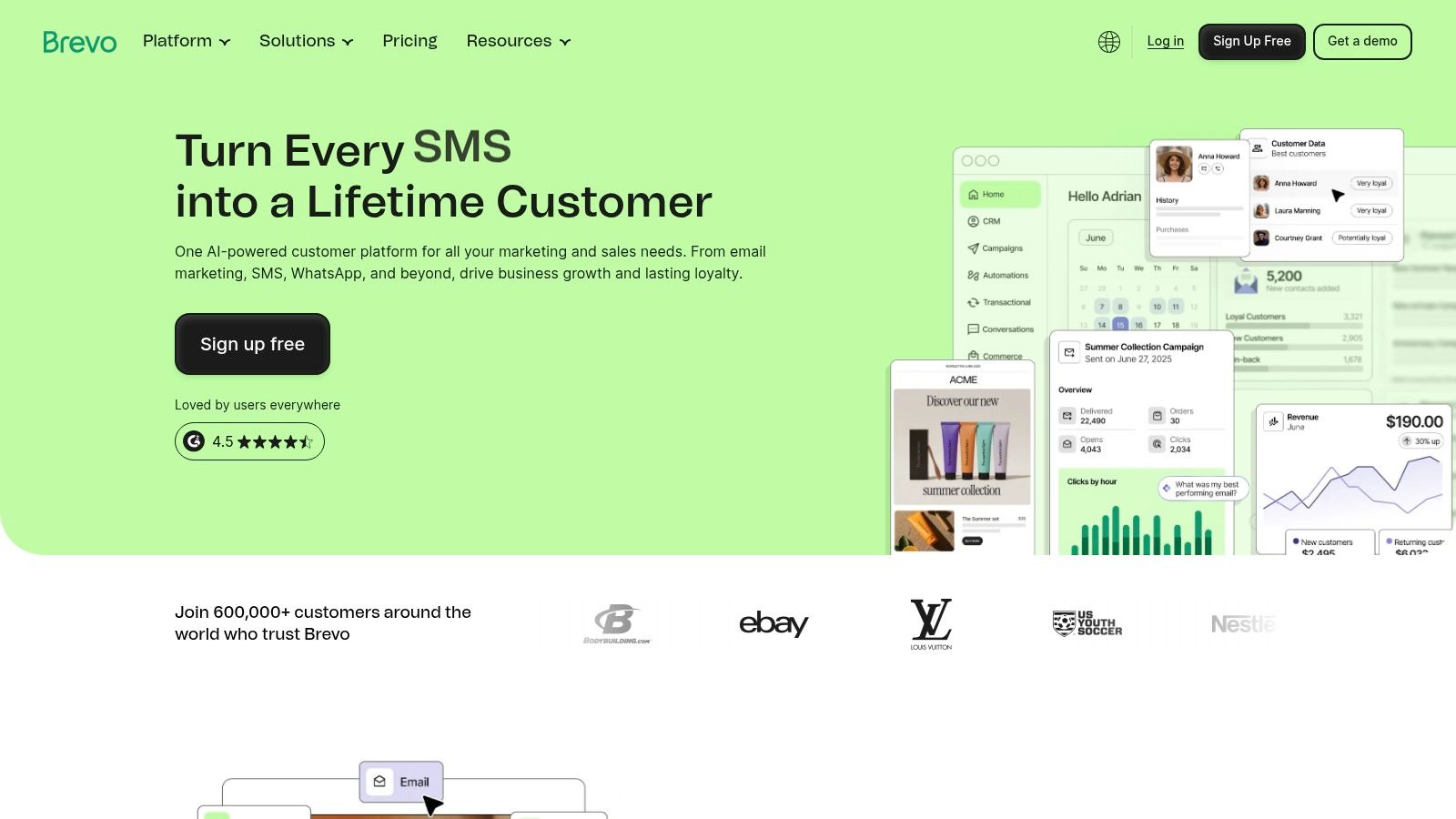
A common point in the buying process looks like this: Mailchimp feels too expensive for a simple newsletter program, but a self-hosted tool still feels like more ownership than your team wants. EmailOctopus fits that gap well.
It sits between the all-in-one platforms and the true BYOP tools in this list. You get a hosted interface that is easy to run day to day, plus the option to connect Amazon SES if lower sending costs become the priority later. That business-model flexibility is the primary reason it belongs near the top of a cheap Mailchimp alternatives list.
A hosted tool with a lower-cost path
What I like about EmailOctopus is that the product does not pretend to be everything. It focuses on the basics that smaller teams use: broadcasts, signup forms, simple automations, list management, and reporting. Setup is faster than a self-hosted option, and the interface is easier to hand off to a marketer who just wants to build campaigns and send them.
The trade-off is ceiling, not onboarding.
If your email program is mostly newsletters, lead nurture, product updates, or straightforward automations, EmailOctopus is usually enough. If you need deep ecommerce branching, lots of cross-channel logic, or a larger CRM-style operating model, you will feel the limits sooner than you would on a broader platform.
Its other advantage is optionality. You can start with the hosted setup, keep operations simple, and move closer to BYOP economics later through SES without changing your whole process. That makes it a practical fit for teams that expect list growth but are not ready to commit to the heavier setup that tools like Sendy or MailBluster ask for.
That also makes it useful for readers comparing lightweight hosted platforms side by side. If you are weighing EmailOctopus against another budget-friendly option, this Mailchimp vs MailerLite comparison helps frame what you gain from a simpler newsletter tool versus a more rounded marketing platform.
A quick fit check:
- Choose it if: You want a hosted platform that stays simple, keeps costs under control, and gives you an SES path later.
- Skip it if: You need advanced ecommerce automation, a wider channel mix, or a platform your team can grow into for several years without hitting feature limits.
For lean SaaS teams, small agencies, and businesses that want to send good email without turning the stack into an engineering project, EmailOctopus is one of the cleaner middle-ground picks.
4. MailBluster
MailBluster also sits in the BYOP lane, with Amazon SES at the center of the setup. The appeal is straightforward. You get a marketing interface for campaigns, automations, templates, and reporting while keeping your sending economics tied to SES rather than a hosted contact-pricing model.
That’s attractive for high-volume senders who care more about predictable cost per send than about having the broadest feature set in the market.
When wholesale-style sending matters most
MailBluster tends to make sense when your list is large, your sending volume is meaningful, and your team is willing to handle SES setup. If that sounds like your operation, the model is hard to ignore. A lot of hosted platforms look cheap until the list grows and monthly rent starts to feel permanent.
The limitation is that SES is not a turnkey consumer app. You still need to deal with domain verification, deliverability basics, and account management. MailBluster doesn’t remove that responsibility. It gives you a friendlier layer on top of it.
What I like about this category in general is the honesty of the trade-off. You save money and gain control, but you accept more technical ownership. That’s often the right bargain for DTC brands, internal marketing teams with technical support, and operators who send enough volume to care about markup.
5. MailerLite
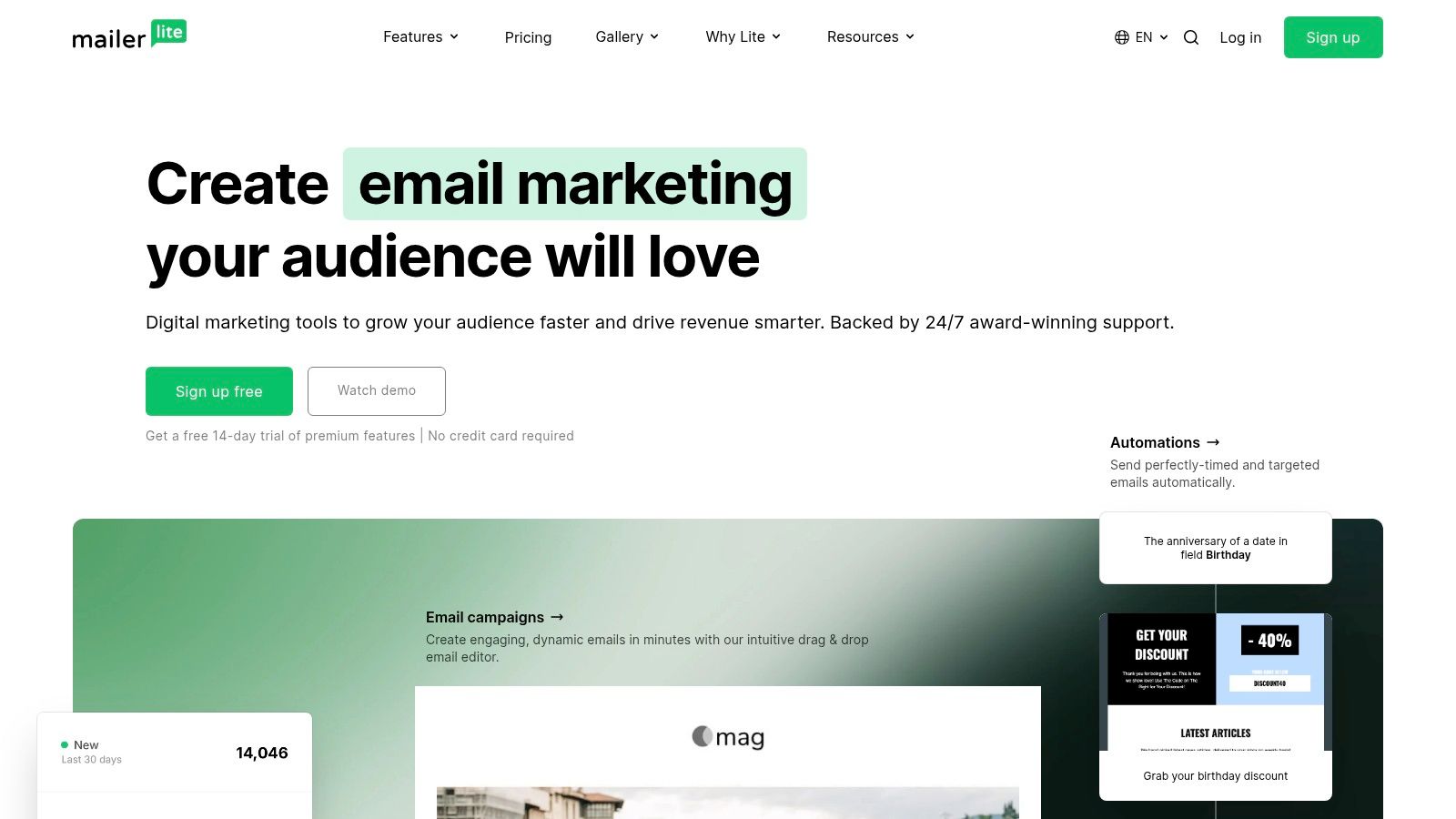
MailerLite is the hosted all-in-one I recommend most often when someone says, “I just want Mailchimp, but cheaper and less annoying.” It’s polished, easy to hand over to a non-technical team, and it doesn’t feel stripped down in the way some low-cost tools do.
For a lot of small businesses, that’s enough. Not every team needs infrastructure ownership. Some just need a platform that works, stays affordable for longer, and doesn’t punish every bit of list growth immediately.
The low-cost all-in-one most teams can actually use
MailerLite’s pricing is one reason it shows up so often in cheap mailchimp alternatives lists. Paid plans start at $10 per month for 500 subscribers and scale to $29 to $39 per month for 5,000 subscribers, with unlimited sends on paid plans, while Mailchimp’s Essentials plan is listed at $26.50 for 1,000 contacts and around $100 per month for 5,000 subscribers in Email Vendor Selection’s Mailchimp alternatives review.
That same review notes a free plan with 1,000 subscribers and 12,000 emails monthly, plus user ratings of 4.7/5 on Capterra and 4.6/5 on G2. In practice, that tells you MailerLite isn’t just cheap. It’s cheap and broadly liked.
If you want a deeper side-by-side, this Mailchimp vs MailerLite comparison is useful.
MailerLite is the “safe choice” for teams that want lower costs without learning a new operating model.
What works well is the balance. You get drag-and-drop editing, landing pages, A/B testing, ecommerce triggers, segmentation, and a clean UI. What doesn’t work as well is long-term price insulation. It still scales by active subscribers, so the bill will rise as your list grows. It’s just a gentler curve than Mailchimp.
6. Brevo formerly Sendinblue
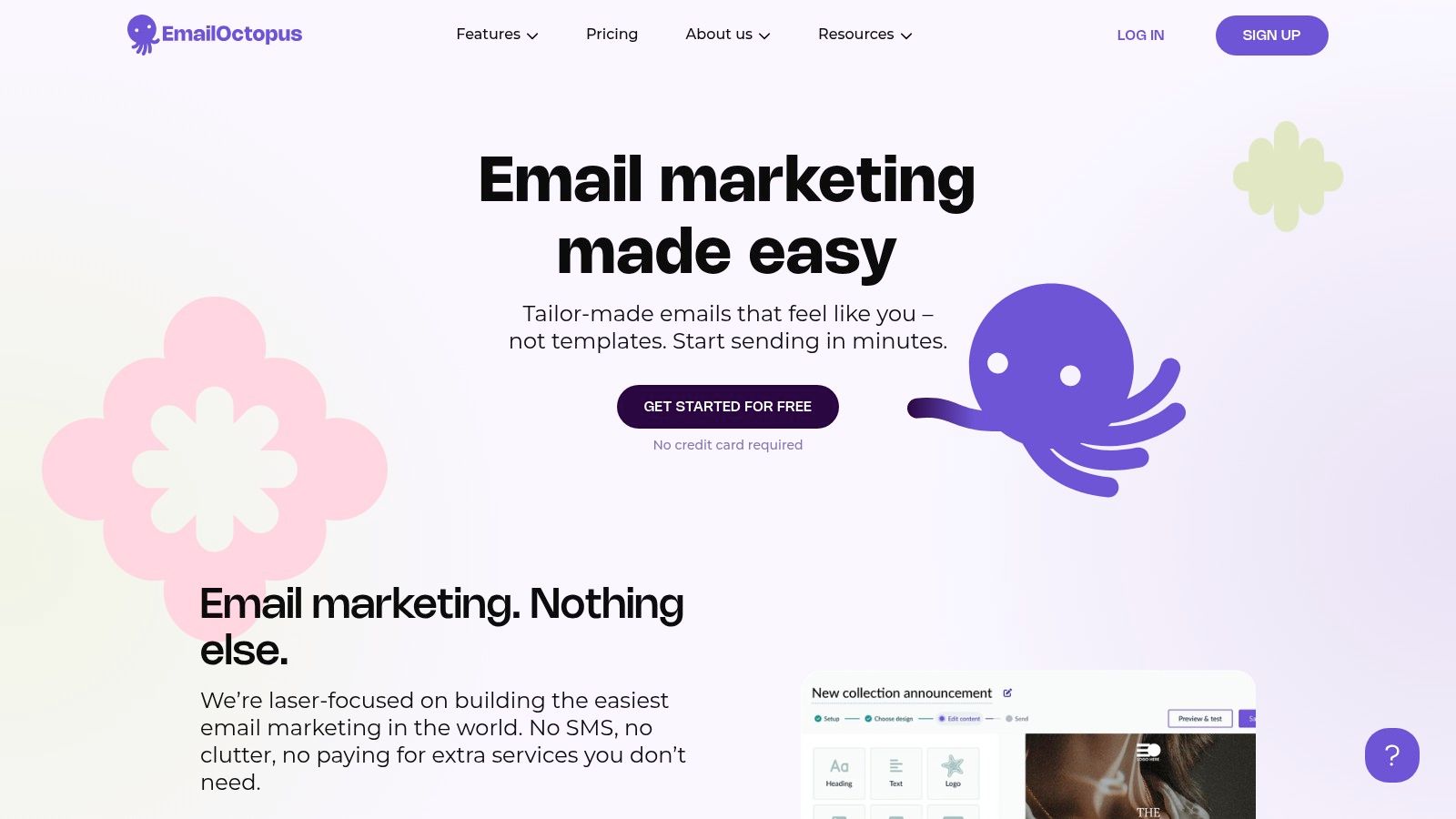
Brevo is the all-in-one pick for businesses that hate paying for contacts they rarely email. If your list is big, your campaigns are selective, and you still want a hosted platform instead of a DIY stack, Brevo solves a real Mailchimp pricing problem.
That is the practical distinction. Mailchimp tends to get expensive as stored contacts pile up. Brevo is often easier to justify when send volume stays controlled.
Best if your send volume matters more than contact count
As noted earlier, Brevo’s free plan is generous on stored contacts but stricter on daily sending. That makes it useful for early-stage teams that are still building a list, testing forms, or setting up basic automations, but it is less comfortable for brands that send high-frequency campaigns.
The bigger reason to consider it is product shape, not just pricing. Brevo sits in the all-in-one bucket of this list, alongside tools aimed at teams that want email, automation, light CRM, and extra channels in one account. SMS, WhatsApp, transactional messaging, and sales features are all part of the pitch. For a lean team, that can mean fewer integrations to maintain and fewer places where data gets out of sync.
If you want a direct comparison, see this Mailchimp vs Brevo breakdown.
A few trade-offs matter in practice:
- Good fit: Companies with a large database, moderate send frequency, and a preference for one hosted platform over a BYOP setup.
- Less ideal: Advanced lifecycle teams that need deeper automation logic on cheaper tiers.
- Best angle: Lower pressure from contact-based pricing, plus email and adjacent channels in one tool.
Brevo is not the simplest interface in this roundup. Some features are gated by plan, and the product can feel broader than a newsletter-first team needs. But for businesses choosing by model, not just feature checklists, it fills a clear role. It is the cheaper Mailchimp alternative for teams that want an all-in-one platform and bill more by sends than by list size.
7. Moosend
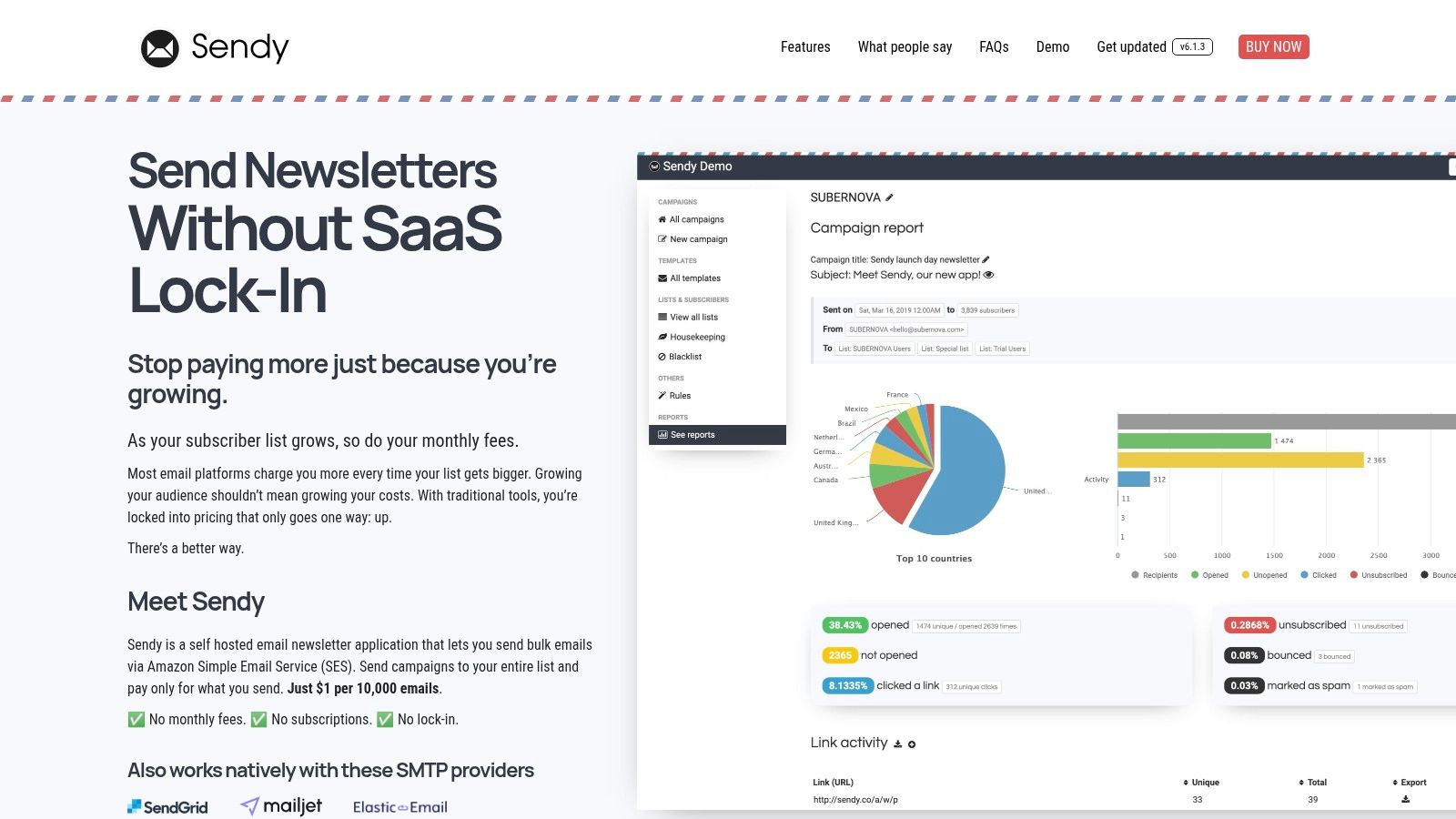
A common small business problem looks like this. You have outgrown simple broadcasts, but you are not ready to pay for a heavier all-in-one platform. You need welcome flows, cart reminders, basic segmentation, and landing pages, and you need them in one hosted tool that does not punish you as quickly as Mailchimp does.
That is the case for Moosend.
A practical fit for SMBs that want automation without a bigger stack
Moosend sits in the all-in-one platform bucket of this list, not the BYOP camp. That matters. You are buying a managed app with templates, workflows, forms, and reporting built in, rather than stitching together a cheap sender with separate software around it.
In practice, its appeal is straightforward. Smaller ecommerce brands, service businesses, and lean in-house teams can set up behavior-based automations without moving into enterprise-style pricing or a more complex CRM-first product. The workflow builder is usually the deciding factor. If your plan is more than a weekly newsletter, Moosend has enough depth to handle the first serious layer of lifecycle marketing.
I would not treat it as the long-term answer for teams that need deep multichannel orchestration, advanced sales tooling, or a large creator-style publishing setup. If that last category is closer to your model, a newsletter-first tool may make more sense. This Beehiiv vs Mailchimp comparison for creator-led email businesses is a better reference point for that path.
Moosend works best for teams that can pay from day one and want more control than entry-level newsletter tools usually give. The trade-off is product breadth. You get useful automation and page-building features, but not the wider business suite some competitors pitch. For the right buyer, that is a good trade. Less platform sprawl, lower cost pressure, and enough automation to run a serious small business email program.
8. Sinch Mailjet
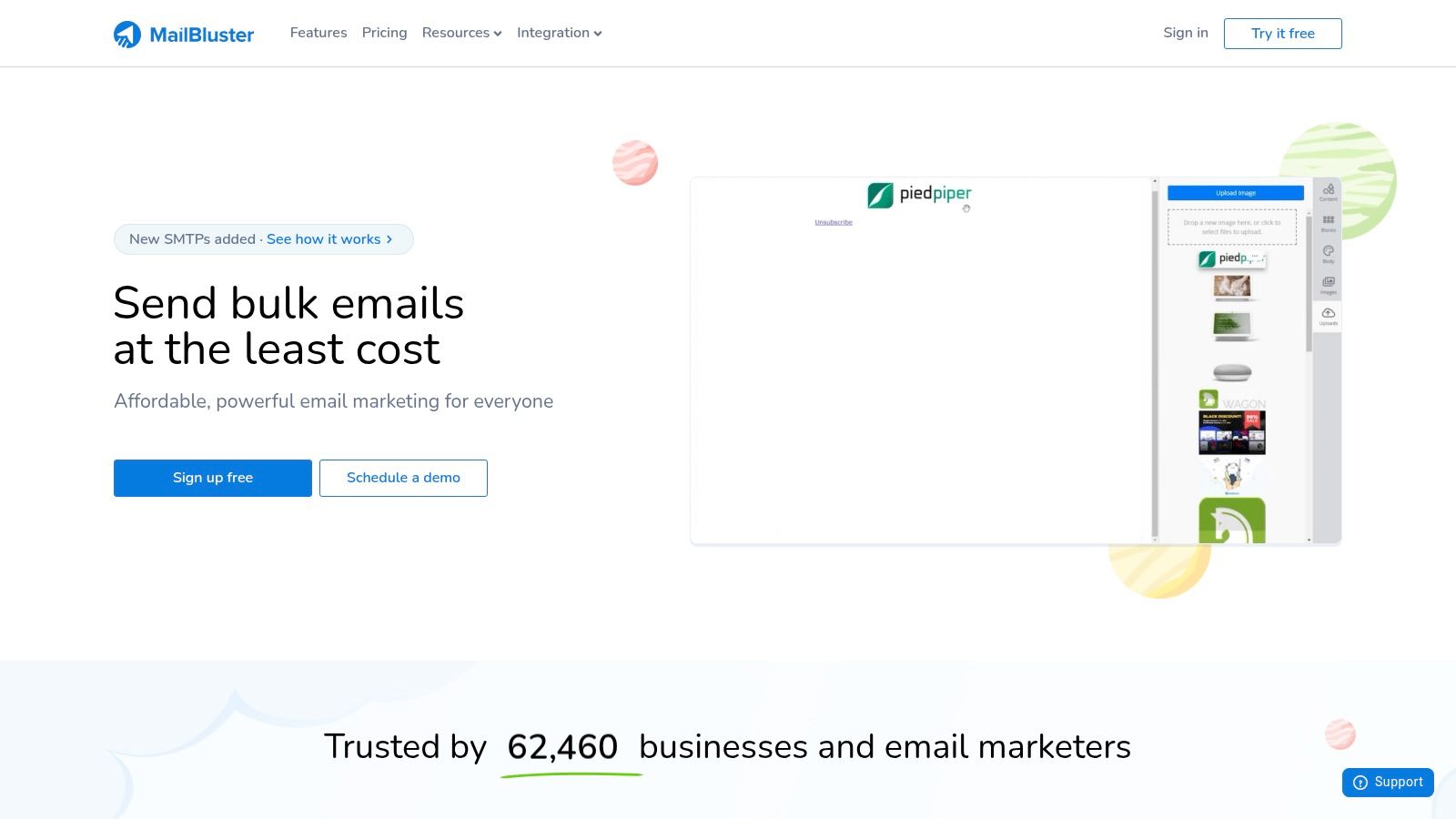
Sinch Mailjet is useful in a very specific setup. Your marketers want a campaign builder. Your developers want API and SMTP access. You don’t want two separate vendors unless you have to.
That’s the scenario where Mailjet makes the most sense.
Useful when marketers and developers share one account
Mailjet combines marketing campaigns with transactional email tooling in one environment. That alone can simplify stack decisions for SaaS products, product-led teams, and businesses that send both newsletters and app emails under the same broader operation.
Its strength is not that it’s the absolute cheapest option in every case. Its strength is role coverage. Marketers can build and segment campaigns. Developers can work with SMTP, API, and templating patterns without handing the whole sending operation to another service.
The trade-off is that some of the more attractive features sit higher up the ladder. If your main goal is to “spend less than Mailchimp,” there are cheaper paths. If your goal is “spend sensibly while keeping marketing and product email under one roof,” Mailjet is more compelling.
I’d put it in the all-in-one bucket for mixed teams, not for pure newsletter creators or hardline BYOP buyers.
9. Beehiiv
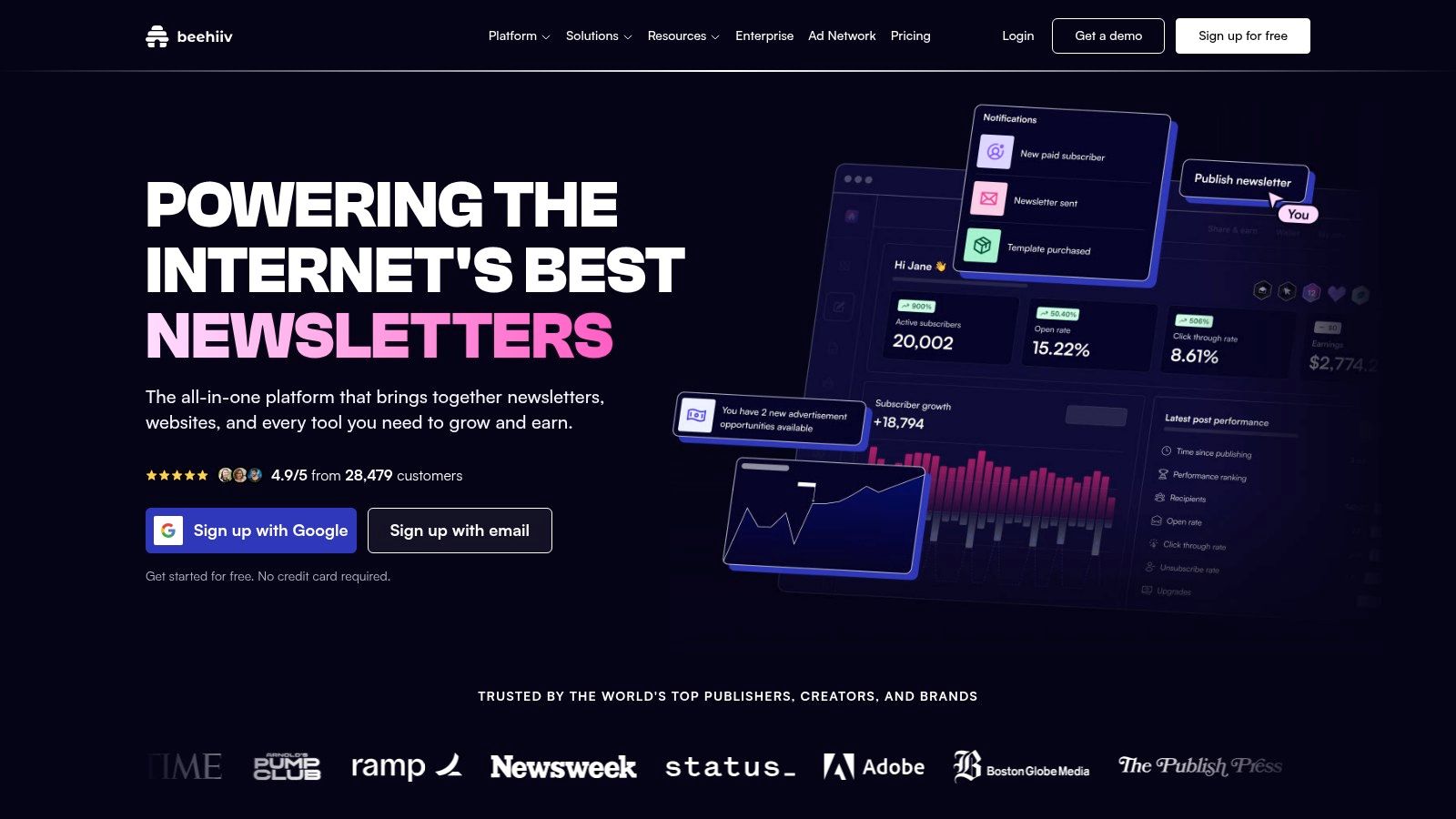
Beehiiv is the one to look at when your business is the newsletter. Not the newsletter as a support channel. The newsletter as the product, audience asset, or growth engine.
That distinction matters because creator-focused tools solve a different problem than ecommerce or SaaS email tools. They care more about audience growth loops, monetization, referral mechanics, and publishing workflow than about abandoned cart logic or CRM depth.
Built for newsletter businesses first
Beehiiv’s appeal comes from flat platform pricing on paid plans, unlimited sends on paid tiers, and built-in monetization tools including paid subscriptions and ad network support, based on the product notes provided. For heavy newsletter senders, that model can feel much more natural than contact-tier pricing from a traditional ESP.
Many operators make a category mistake. They compare Beehiiv to Mailchimp as if both are trying to be the same product. They’re not. Beehiiv is for publication-style businesses first.
If you’re evaluating that angle, this Beehiiv vs Mailchimp comparison is a useful shortcut.
What I’d watch closely is fit. Beehiiv is excellent when growth and monetization sit at the center of the newsletter strategy. It’s less compelling when you need deep ecommerce triggers or broader customer lifecycle automation. For a media-style newsletter, though, it’s much closer to the right mental model than Mailchimp.
10. Buttondown
Buttondown is the opposite of a kitchen-sink email platform. That’s exactly why some people love it. It stays focused on writing, publishing, archives, simple audience management, and optional add-ons for the people who want more later.
For writers, indie founders, and operators who hate bloated marketing software, that restraint is a feature.
The minimalist option for writers and indie founders
Buttondown works best when your workflow is content-first. You want a clean editor, hosted archives, custom domains, simple segmentation, and enough analytics to know whether the list is healthy. You do not want to spend your afternoon clicking through CRM menus you’ll never use.
The modular pricing philosophy is attractive because it lets smaller creators avoid paying for advanced functionality before they need it. The downside is obvious too. If you add enough extras, the simplicity advantage starts to shrink.
Keep Buttondown simple and it stays charming. Try to turn it into an enterprise automation stack, and you’ll hit its limits quickly.
I’d choose it for a thoughtful weekly newsletter, founder updates, or a niche publication. I wouldn’t choose it for a store, a lifecycle-heavy SaaS operation, or any team that needs broad automation from the start.
Top 10 Cheap Mailchimp Alternatives Comparison
| Product | Pricing & billing | Core features | Best for | Deliverability & control |
|---|---|---|---|---|
| Mailtani, Recommended | One-time €99 (early €49), plus your provider sends (~€0.10 / 1,000) | Broadcasts, cold sequences, visual automations, signup forms, segmentation, analytics, IMAP inbox, warmup, REST API | E‑commerce, devs, indie hackers, SaaS founders who want predictable unit economics | BYO SES/Resend/Mailtrap, full DKIM/DMARC control, dedicated reputation, warmup & rotation tools |
| Sendy | One-time license + SES send costs (~$1 / 10,000) | Campaigns, autoresponders, segments, REST API, bounce handling | Cost-conscious high‑volume senders and self‑hosting teams | BYO SES, full reputation control; requires self‑hosting & maintenance |
| EmailOctopus | Free tier → paid plans by subscribers; optional SES Connect for low-cost sends | Campaigns, automations, forms, landing pages | Small businesses and low-cost senders wanting simple setup | Optional SES Connect for BYO sending; managed UI otherwise |
| MailBluster | Low-cost subscription (Starter → Pro); integrates with SES for send costs | Campaigns, automations, templates, segments, reporting | High‑volume senders seeking predictable costs | Uses Amazon SES (BYO); predictable near‑wholesale send rates |
| MailerLite | Free plan → subscriber-based paid tiers | Drag‑drop editor, automations, ecommerce triggers, A/B testing | Early‑stage businesses and ecommerce stores | Managed ESP infrastructure; less BYO control, polished deliverability tools |
| Brevo (Sendinblue) | Volume-based by monthly sends; free tier available | Email campaigns, automation, basic CRM, SMS/WhatsApp add‑ons | SMBs needing multi‑channel and predictable send‑based billing | Managed sending, optional add‑ons; some advanced features gated |
| Moosend | Paid tiers by contacts; pay‑as‑you‑go credits option | Visual automation, landing pages, forms, AI writing | SMBs seeking inexpensive automation & pay‑as‑you‑go flexibility | Managed sending; simple deliverability tools, limited support on base plans |
| Sinch Mailjet | Email‑volume pricing; free testing tier | Campaign builder, segmentation, SMTP/API, MJML templating | Teams needing both developer API and marketer UI | Managed service with optional dedicated IPs on higher tiers |
| Beehiiv | Flat platform pricing; unlimited sends on paid plans | Newsletter CMS, referral program, ad integration, paid subs | Publishers, creators focused on growth & monetization | Managed sending; focused on newsletter deliverability and growth tools |
| Buttondown | Free tier + à‑la‑carte add‑ons; charges by active subscribers | Minimal editor, hosted archives, tagging, add‑on automations | Indie creators and writers wanting simple, low‑cost newsletter tools | Managed sending; lightweight deliverability, modular feature pricing |
The Right Tool for Your Stage and Scale
A cheap Mailchimp alternative can look right on day one and still become the wrong tool six months later. The key decision is not just price. It is which business model matches how you grow, how often you send, and how much control you want over your email stack.
That is why this list works better when you sort it by platform type, not by feature checklist.
All-in-one platforms fit teams that want speed and low setup overhead. If your priority is to migrate fast, hand the sending infrastructure to someone else, and keep campaign production simple, MailerLite is the easiest fit for many small businesses. Brevo makes more sense when you care about send-based billing or want email, SMS, and basic CRM in one place. Moosend is a practical budget option for lighter automation needs. Mailjet is the better fit when developers and marketers both need to use the same system without fighting the product.
BYOP tools suit operators who care about cost structure. Sendy, EmailOctopus, MailBluster, and Mailtani separate the app from the sending provider, which usually changes the economics in your favor as volume grows. That matters for SaaS, ecommerce, and product-led teams that send a lot but do not want to be punished for list size alone. The trade-off is straightforward. You usually get lower long-term costs, but you also take on more responsibility for setup, provider choice, and deliverability decisions.
Creator-focused platforms are their own category because the job is different. Beehiiv and Buttondown are better choices when the newsletter is the product, the audience, or the growth engine. They are less concerned with broad marketing stacks and more concerned with publishing, subscriber experience, and monetization.
Use this filter:
- Choose an all-in-one platform if you want the fastest path to working campaigns.
- Choose a BYOP tool if predictable sending costs matter more than plug-and-play convenience.
- Choose a creator platform if your newsletter drives media, audience revenue, or paid subscriptions.
Mailchimp usually stops making sense when your billing model no longer matches your business model. That is the point to switch.
If you want another angle on platform selection, this guide to compare e-commerce email marketing platforms is a useful companion read.
Mailtani stands out here for teams that want BYOP economics without dropping down to a barebones setup. As noted earlier, it supports Amazon SES, Resend, and Mailtrap while still giving you campaigns, automations, forms, analytics, inbox sync, and API workflow coverage in one product. For DTC brands, SaaS teams, indie builders, and cost-conscious marketers, that combination is one of the clearest paths away from per-subscriber pricing.


